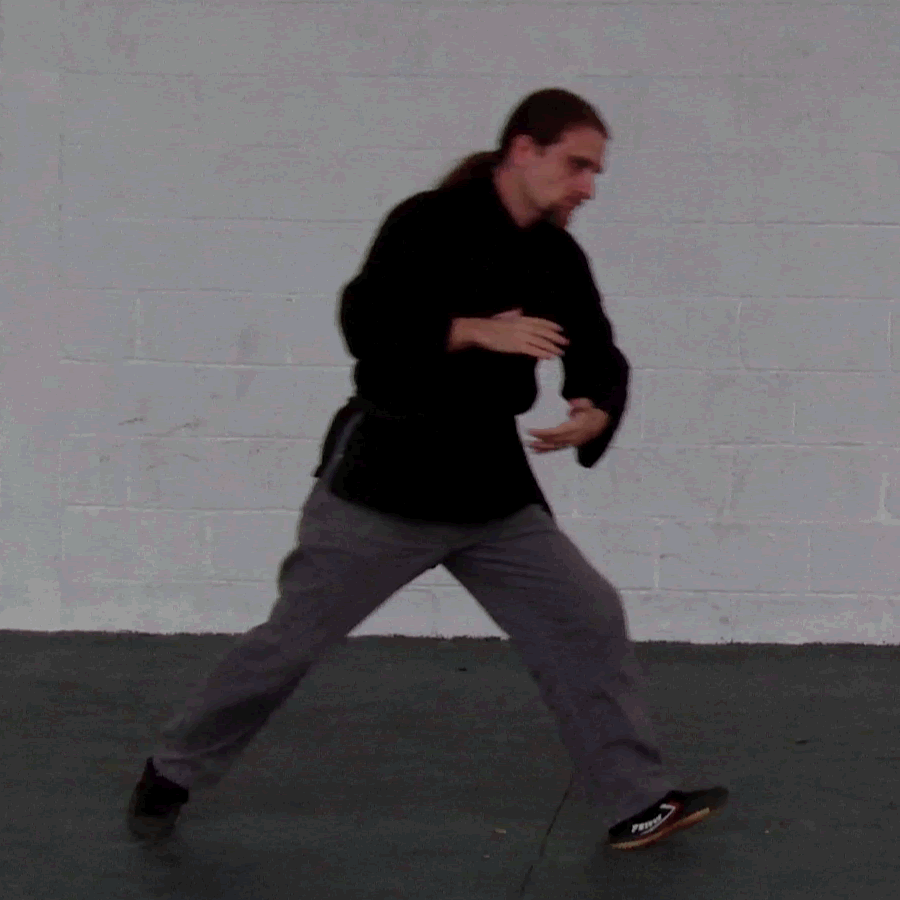
Friday, April 30, 2010

A Brief History of the Yang Style


     There has been a lot written about the history of this art, and most of it is uncertain at best. There are plenty of other sources of information available on the various details and stories. I’m only sharing the most certain elements of its history here.


    Yáng Lùchán (杨露禅, 1799-1872), whose birth name was Yáng Fúkuí (杨福魁), was born in Guăngpíng. During his life, he studied a number of martial arts. For part of his life, he worked in the Chén household and learned a version of the Chén Family Fist. He may also have studied in Zhàobăo village.

    When he was older, he returned to his home province and developed what is now known as the Yáng Family Fist, or Yáng Style Tàijíquán. From the number of styles related to the Yáng family, we can gather that his teaching method and forms changed gradually over the years he taught and that his students all added their own approach.

    He passed the art on to two of his sons: Yáng Bānhóu (杨班侯, 1837-1890) and Yáng Jiànhóu (杨剑侯, 1839-1917). Yáng Jiànhóu passed the art on to two of his sons: Yáng Chéngfŭ (杨澄甫, 1883-1936) and Yáng Shàohóu (杨少侯), 1862-1930).

    Yáng Lùchán’s grandson, Yáng Chéngfŭ, is responsible for publicly spreading the practice of his version of the large frame, properly referred to as the Public Form but usually referred to as the “Long Form”.

The Indoor Yang Family System: An Introduction

    The most popular style of Tàijíquán (“T’ai Chi”) in the world is the Yáng Family system. Practitioners learn one empty-handed form that doesn’t have any especially difficult moves in it. Perhaps they also learn Push Hands and a straight sword and sabre form. Some practitioners will be lucky enough to learn a spear form.

    What most practitioners don’t know is that this is only the public version of the system. The “indoor” system that the family has practiced includes much more material: Four main forms, four “corner” forms, thirteen Gōngfă movements, and several other formal sets of skills, including a much more complex Push Hands series than is taught publicly.

    I have received a lot of questions since I published the Wise Hammers Form book. Mostly they had to do with who my teacher was and why it is called the “Indoor Yang Style.”

    Firstly, my teacher was a very private woman who only taught me because she was a good friend of my Daoist master. I’m not going to share her name publicly. All of my more advanced students know her name.

    Secondly the name. My teacher didn’t formally name this system “The” indoor Yáng system. She simply stated that it was “indoor”, which simply means “private”. The implication is that this is the system that the Yáng family practiced among themselves and didn’t share publicly. I have labelled this system “The Indoor Yáng Style” to distinguish it from the more popular “public” styles that most practitioners are familiar. I am not trying to create a new style.

    Personally, what I think we have here is a snapshot of what Yáng Lùchán was teaching at some point in his development. As more information becomes available on this art, we can see the growth of his personal style through several stages. This one is very similar to the Imperial Yáng Style, and may be closely related to it chronologically.

    In this series I am documenting the system, set by set. It is my hope that it will broaden your knowledge of this strange art that manages to be both widespread and obscure at the same time.

    Personally, I still teach the Public Form to my students, because it is a wonderful, refined form and most of my students are not going to be willing to learn about 3 1/2 hours worth of material. I’m in the process of learning the Yáng Jiànhóu version of the system, which suits me perfectly.

    Once again, this is the system exactly as I learned it. If I have added anything myself, I have documented it. With all the mediocrity that’s plaguing the martial arts these days, I think it’s important to take a stand for the traditional arts.


The main forms in this system are:

The Four Main Forms:
The Large Frame Form
The Medium Frame Form
The Small Frame Form
The Long Fist

The Four Corner Forms:
The Post-Heaven Form
The Wise Hammers Form
The Little Nine Heavens Form
The Diăn Mài / Diăn Xúe  (Pressure Point) Form

Other Material Includes:

The Thirteen Cinnabar Gōngfă Movements
The Thirteen Animal MovementsMáo (Spear)
Jiàn (Straight Sword)
Dāo (Sabre)
Gùn (Staff)
Walking Stick
Small Tàijí Ball
Heavy Tàijí Ball

The Little Nine Heavens Form: Introduction

    The Little Nine Heavens Form teaches the important alternate strategy of the art: That is, the secondary style that you fall back on when your main strategy fails you. In the case of Tàijíquán, your main strategy involves heavy rooting to the ground and clever, soft redirecting of your opponent’s attacks. however, there will come a time when these skills become a liability.

    One situation would be when your opponent is beating you. Your heavy rooting will make it difficult to respond to your opponent’s techniques, so you will have to pick up your feet. your clever yielding will not be at your disposal so you will be forced to do some good old-fashioned hard blocking and shielding.

    Another situation would be when your opponent is out of range. Perhaps your throwing technique didn’t work well and your opponent is stumbling away from you. You will once again have to abandon your heavy rooting and make chase.

    This is the third of the four “corner” forms -- forms that support and expand upon the four main forms of the system. The Four Corner Forms can be taught in any sequence the teacher chooses, but they each have a logical position between The Four Main Forms. This form, for example, is performed in the style of the Small Frame Form, and therefore should be taught after this form.

    The name “Little Nine Heavens” refers to traditional Daoist philosophy that states that a human being is a microcosm of the universe itself. In this case, it is referring to the circular walking that is the signature of the Seven Star Eight Steps systems.

    An understanding of basic Baguazhang  movement would be 
useful in studying this form. Baguazhang is built from the same Daoist martial arts system as this form.

    Since this is not a beginner form, I have chosen not to include all the tiny details of where to point the head, how to breathe, etc. To those with the required background, this will all be obvious.

    At the end of the book I have included a list of the movement names. I have not included the graphic sequence in this volume, because it is not a practical size to photocopy. Instead, I will be providing it as a free download from my website in 8.5” x 11” for easy photocopying. You have my permission to do so.

    To those of you who love the martial arts as much as I do, I wish you growth and fulfillment.

Sincerely,

Shifu Jonty Kershaw

The Little Nine Heavens Form: Movement 10


 10. 单鞭 Dān Biān
Single Whip


    Turn your right foot to point to the Northwest and begin to shift your weight entirely over onto it, turning to face North. At the same time, circle your right wrist to the right...
(Picture 10a)


    ...then up and over...
(Picture 10b)


    ...and down into Hook Hand. Your weight should now be entirely over your right foot and your left foot should be touching the ground with the ball of the foot.
(Picture 10c)


    Turn your body to face West. Simultaneously swing your left arm, palm up and elbow slightly bent, all the way past your left knee.
(Picture 10d)


    Drop your body a little as your shift your weight forward into a right Sāntĭ Stance. At the same time, turn your left hand over so it faces West and drop your elbow down a little, just to the left of the knee.
(Picture 10e)


This movement needs a series of rear-view pictures. I will post them shortly.

The Little Nine Heavens Form: Movement 9


9. 穿掌 Chuān Zhāng
Pierce Palm


     Step your right foot up next to your left in a left Empty Stance. At the same time, drop your right hand, palm down, in front of your Dāntián.
(Picture 9a)


    Step through with your right foot into a left Sāntĭ Stance. At the same time, turn your right hand palm-up and thrust it forward at throat height, and turn your left hand palm down, fingers touching the inside of your right elbow.
(Picture 9b)


Movement Notes:

    With the exception of the step, this is exactly the same as the last Pierce Palm.

    This movement should follow smoothly from the last one, continuing the forward momentum. This will generally be the case in this form, since the theme is moving footwork.

The Little Nine Heavens Form: Movement 8


8. 卧虎跳涧 Wò Hŭ Tiào Jĭàn
Crouch Tiger, Jump the Brook


    Take a leaping step forward with your left foot.
(Picture 8a)


    As you put your left foot down, pivot on the heel and leap forward again, turning your body to face North. Make sure you jump pretty high off the floor on this step.
(Picture 8b)


     As your right foot sets down, once again pivot on the heel to face South.
(Picture 8c)


    Set your left foot down to the East and a little to the North and swing around into a left Bow Stance, using the momentum to shift your weight forward as you push both palms straight ahead.
(Picture 8d)


Movement Notes:

    You may have noticed that Jump the Brook happens before Crouch Tiger, rather than in the same order as the movement name. Why name backwards? I don’t know.

    It is very important that in the middle part of the leap you lift up off the ground, high enough to clear something on the ground. For example, a prone body (hint).

The Little Nine Heavens Form: Movement 7


7. 穿掌抱球
Chuān Zhāng Bào Qìú
Pierce Palm, Hold the Ball


    Switch feet...
(Picture 7a)


    ...and step forward with your right foot into Sāntĭ Stance. At the same time, turn your right hand palm up and thrust it fingers-first forward at about throat height. Open your left hand palm down so the fingertips are touching the inside of your right elbow.
(Picture 7b) Missing Picture Coming Soon.


    Hook your right foot in and then shift your weight mostly onto it. (Picture 7c)


    Immediately, turn your right foot to point Southeast and shift most of your weight onto it as you turn your feet into a right Sāntĭ Stance facing East. Only turn your body to face South, and fold both arms inward into Hold the Ball posture, right hand on top.
(Picture 7d)